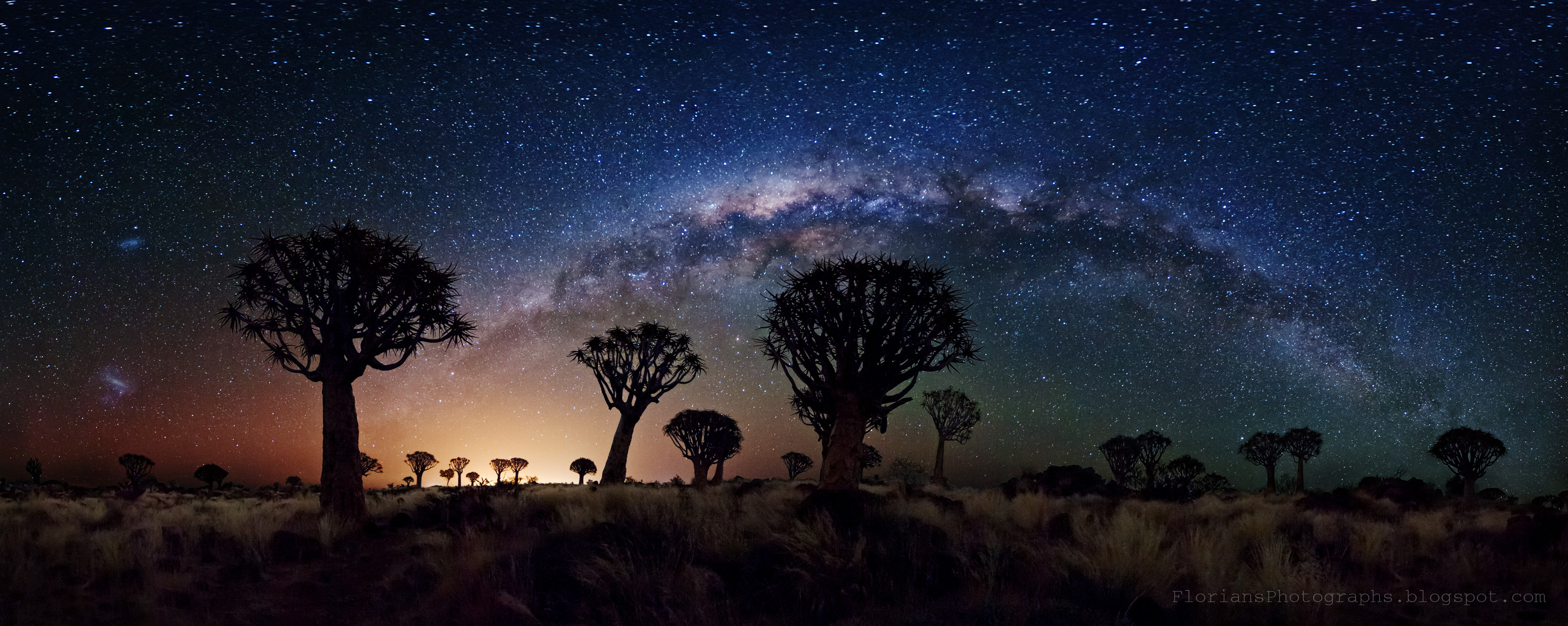
Oct 2015 trip.
Spreetshoogte Pass – On the drive between Windhoek and Sossusvlei
After flying in from either the US or Australia, the troop spent a short night in Windhoek then spent the next day driving from Windhoek to our Lodge in the desert – the Kulala Desert Lodge outside of Sossusvlei. The missus and I actually didn’t get to spend a night in Windhoek – we missed our connection in Jo’burg and spent the night at the Intercontinental at the airport. While a bit unfortunate, at least we got out of a plane, had a proper meal and a shower, and got to sleep a bit. We had to make a connection in the morning and met up with the rest of our travelling group in Windhoek. We arrived decently early in the morning (departed Jo’burg on the 6 AM flight – good thing my body was still confused about what time zone I was in). Once in Windhoek, we gathered the group, picked up our 4×4 and set off. Quick stop at the grocery for some provisions and we were on our way.
Much of the seven hour drive between Windhoek and Sossusvlei was really nothingness – it became more and more remote and desolate as we got closer further away from Windhoek. As we got closer to the Namib Desert, we had to pass over a small mountain range that split the Khomas Highland to the Namib Desert. Our advisor and agent suggested that we should really take the extra time and take the route over Spreetshoogte Pass – beautiful views – I’m so glad we spent the extra 45 minutes.

Spreetshoogte Pass | Sony A7R II | Sony 16-35 f/4 | 35mm | f/4.5 | 1/1250th | ISO100
We ended up taking a short break at the pass to have a snack and a beer out of a cooler in the back and take in the view.
Climbed 400m Big Daddy dune
I have never been anywhere in the world quite like Namibia – or the Namib Desert. The Namib Desert between Sossusvlei and the coast is 200kms wide (125 miles), and actually stretches north / south about 2,000kms (1,250 miles) covering parts of South Africa, Namibia and Angola. Much of the desert is this super vibrant red sand, which makes for quite interesting color contrasts. At the Kulala Lodge, they offer various activities – and we took them up on a few.
One of the very best experiences we had was to climb the Big Daddy Dune. The dune itself is approximately 325 meters tall (even though we were told during our climb that it was 400 meters tall), and it took us about 2 hours to climb up, and we went straight down the face of the dune into Deadvlei, taking approximately 10 minutes. We left the lodge around 7 AM and started climbing the dune by around 8 AM. We were at the top by 10 AM, and couldn’t be happier – I estimate it was already over 35C / 100F by 10 AM.

The crew | Canon Powershot S125 | 5.2-26mm | 5.2mm | f/2.5 | 1/2000th |ISO80

Up the Dune | Sony A7R II | Sony 70-200 f/4 | 104mm | f/20 | 1/1000th | ISO4000
A little something that I would have never known – it’s easier to walk over sand where someone else has already walked before. Our guide was smart enough to let us take our time getting to the dune so that a few other groups went before us. If you walk on someone else’s footprints, the sand is actually a bit more solid and it takes less effort to walk. Pro tip.
Walking Deadvlei
After we walked down the Big Daddy Dune, we ran down the dune and into Deadvlei. Once you get into Deadvlei, you can literally walk across this dry clay pan that sports (estimated) 900 year old dead trees. The trees, because it’s so dry, have actually not decomposed, but have almost just become statues and are actually petrified.

The view of Deadvlei from atop | Sony A7R II | Sony 700-200 f/4 | 70mm | f/20 | 1/80th |ISO125

Walking across Deadvlei | Sony A7R II | Sony 700-200 f/4 | 77mm | f/20 | 1/100th |ISO100

Petrified Trees of Deadvlei | Canon Powershot S125 | 5.2-26mm | 20.4mm | f/8 | 1/500th |ISO80
I have never seen anything quite like the pan of Deadvlei – anywhere in the world.
Slept under the stars in the Namib desert – and the Milky Way
At the Kulala Lodge, there is a main reception / dining room building surrounded by about a dozen individual huts. One of the options that the Lodge offers is to set a mattress and sheets and blankets up on the top of the hut where you can sleep under the desert stars. That evening was so cool – just sleeping staring straight up at the Milky Way – which you can see almost stretching the way across the entire night sky.
Amarula shots … Followed by tequila shots…
The staff at Kulala Lodge looked after us pretty well. On our last night, we ate outside, as we did every night, and retired to the bar. Our hiking guide, Michael (on the left), began ordering shots for all of us. They all insisted that we must try one of the local spirits called Amarula – this is basically a cream liqueur, similar to Bailey’s. Interesting shots. It was only then that they decided to break out the tequila. Then things got a bit cloudy – similar to the photo below.

Shots of the local | Canon Powershot S125 | 5.2-26mm | 5.2mm | f/1.8 | 1/20th |ISO800
Hot air balloon w champagne brunch
One of the absolute highlights of our time in the Namib desert was the hot-air balloon we took. Now keep in mind, we were at the bar of the Lodge with our guides until about midnight, then they came around and gave us a wake up call at around 5:45 AM. It was possible (no necessarily probable) that I was still a bit drunk. We were driven out to a clearing (it was the desert – everything was a clearing) and arrive just before 7 AM. I believe we were actually the last of the guests to get there, so there wasn’t much waiting around, just straight onto the balloon and within about 5 minutes we’re up in the air. Just to give a little idea of how this was setup – it was a large-ish basket, I would say accommodating around 14-16 people plus the pilot. We were in the air for ~1 hour, and we hovered around 1000-1200 meters for most of the time. It was absolutely breathtaking.

Our hot air balloon setup | Sony A7R II | Sony 24-70 f/4 | 25mm | f/4 | 1/60th | ISO160
This view is looking back over desert, towards the ocean. At this point, there is about 125 kms of sand dunes until you reach the Atlantic Ocean. The dunes go on and on as far as the eye can see.

Back towards the ocean | Canon Powershot S125 | 5.2-26mm | 16mm | f/5.7 | 1/200th | ISO80
After the balloon flight, we were welcomed back onto the ground with a beautiful champagne breakfast.

Campagne is open!!! | Sony A7R II | Sony 24-70 f/4 | 28mm | f/4 | 1/4000th | ISO250

Successful Ballooning | Sony A7R II | Sony 24-70 f/4 | 70mm | f/22 | 1/80th | ISO100
Pies in Solitaire
After we got back to ground and finished with the champers and breakie, we were back to the lodge to pick up our fourth traveller, and on the road. Now, I didn’t get any photos at this spot, but in Solitaire, Namibia – which is basically just a cross-road along the highway – you have one of the best pie shops in (I reckon) all of Africa, let alone Namibia. They serve both sweet and meat pies, as well as an assortment of other bakery items. Since a couple of hours had passed since our champers, I was feeling a bit hungover and the best possible either cure or prevention for a hangover is a good meat pie – we were in business. I had the chicken and mushroom pie, the rest of the crew ate various others, and were were back on our way. I didn’t make this up – many others have mentioned this little oasis in the desert.
Flamingos in Walvis Bay
Off we went, headed towards Etosha National Park up in the north and we got to stop and celebrate a little stop in the road (Go United!!!) .

Passing the Tropic of Capricorn | Canon Powershot S125 | 5.2-26mm | 5.2mm | f/4 | 1/2000th | ISO160
After a bit of a nap in the car, we headed towards our stop-over for the night in Swakopmund. However, on the way and just a bit south is Walvis Bay, which is well known for the flocks of flamingos that hang out there. It was a bit of a crappy day weather-wise – the wind was blowing and it was oddly cold, however, we got out of the car and said hi to the flamingos.

A million flamingos | Sony A7R II | Sony 70-200 f/4 | 200mm | f/6.3 | 1/320th | ISO100
After Walvis Bay, we drive north to Swakopmund and stayed for the evening. Unfortunately, we got in right at dusk, and left just after breakfast, so I don’t have a whole lot to either say about Swakopmund, nor much of an impression. We did eat dinner that night at The Tug, which was a pretty good seafood restaurant just on the pier.
Saw white rhino mom and kid in the bush
Our next stop was up to Ongava Lodge, just south of the entrance to Etosha National Park. We stayed at the Ongava Lodge for a couple of nights, and then spent a couple of nights up at the Little Ongava Lodge. We spent most mornings on a safari drive, with a lull for midday when it was hot, then generally back out for an evening drive.
On one of our evening drives, we came across these two white rhinos – a mom and her baby. They mostly kept to themselves, but I don’t think that they liked having us there too much. This is an expected behaviour for mothers protecting their children, but since these rhinos are near-threatened, the whole crew felt pretty excited to be able to see a couple, and they just happened to be only a few meters from our truck.

A mama and baby Rhino | Sony A7R II | Sony 70-200 f/4 | 166mm | f/4 | 1/3200th | ISO6400
My partner stood 50 ft away from a rhino on the grounds of the lodge.

Having a little drink | Sony A7R II | Sony 70-200 f/4 | 200mm | f/4 | 1/2500th | ISO800
Showered outdoors with giraffe and zebra walking by
At the Ongava Lodge, we each had a stand-alone hut that was basically a one room suite. Each hut had a nice terrace overlooking the bush. And on the terrace, there was an outdoor shower that had just the appropriate amount of sticks and tree trunks so there was privacy, but you could still look over the bush. We had to give this shower a try, so we hopped in before dinner, as dusk was just starting to come in and as we showered, there were about a dozen zebra and a handful of giraffe that walked by – must have been 20 meters away. Nothing like reminding you that you’re out in the middle of the wild when wild animals walk by you as you shower. And neither of you really care.
Fell asleep listening to lions roar
That same night, we had a nice dinner up at the communal dining area followed by a little wine watching the animals come and go at the watering hole. We finally retired back to our hut to call it a night and got into bed. We left the big doors open, but closed the screened doors to let a little fresh air in. As we were drifting off to sleep, you could hear the low roar of a few lions who (I assume) were just calling out looking for each other. I have to admit, I did have a fleeting thought of whether we should *actually* close the doors, but I thought ‘TIA – this is Africa‘.
M’s big bug ‘No, no, no!!’
Our second night at Ongava Lodge, we had our dinner up at the lodge with a few glasses of wine afterwards watching the animals. We went back to our hut and one of the other members of our group came back for a peek off the terrace. We talked and made a plan for the next day. As our friend was leaving, we walked back into our hut and just heard him shout out, “No, no, no!!!” as he pushed us back, very forcefully back through the door. It took him a few seconds to catch his breath, but he then later described the bug as the “biggest bug” imaginable. Of course – I had to see this thing. It was amazing – I’m so sorry I didn’t get a photo. The thing must have been the size of my hand, and some cross between a normal bug and a dinosaur. It was massive. Our friend was very concerned that we would sleep in the hut that had this massive bug, but you know, you just have to get used to being a little closer to nature sometimes.
Tracked cheetah on foot
Our final stop in Namibia was at the Okonjima Bush Camp and large cat reserve. The reserve is massive at 55,000 acres, and houses Africat, which is a large cat reserve that works to rehabilitate cats in order to set them back in the wild. The reserve is generally fenced off into the camp area, then two large areas for different cats. One morning, we went out in search of cheetah and found these two ladies. They were just laying about, so our guides asked if we wanted to get out of the safari truck to get a better angle for some photos. “Sure!!!” we said. Then, these little girls decided to get up and go for a walk – they split our group in two and just walked right past us – barely paid us any attention at all. I mean, less than a meter away were these massive cats that could have probably tore any of us in half.

We found our cheetah | Sony A7R II | Sony 70-200 f/4 | 188mm | f/4 | 1/2500th | ISO1600
After the cheetah walked right in between us, our guides asked if we wanted to track them on foot, which we did for ~2 kms or so. They ended up at a watering hole and we got some great time with them and a bunch of great photos.

Our Cheetah after a drink | Sony A7R II | Sony 70-200 f/4 | 200mm | f/4 | 1/2000th | ISO200

Where shall we go next? | Sony A7R II | Sony 70-200 f/4 | 200mm | f/4 | 1/1600th | ISO125
An absolutely great week, I would go back to Namibia in a heartbeat. I’d love to spend more time in the east of the country.

The Lodge | Sony A7R II | Sony 24-70 f/4 | 24mm | f/22 | 1/8th | ISO800
Traveller tip : lodges that say Little in their name are the premium ones.
Traveller tip #2 : The desert region is dry and dry and dry. All of our team on this trip had various nose issues – I highly recommend gettings some form of nasal spray that can help with the dryness and the congestion.
 Paul Rin Travel Photojournalism